Showing posts with label Virginia Colonists. Show all posts

Monday, February 13, 2012

Fort Boykin Virginia

My Father at Fort Boykin
While Chasing the Family Ghosts in Virginia, my father and I had the opportunity to visit Fort Boykin, located near Smithfield, Virginia.  Fort Boykin was established around 1623 in order to protect the entrance of the James River from raiding Spaniards.  Fort Boykin provided early warning and protection for the early colonists who had settled along the James River,.  We found the Fort Boykin to be very well preserved and maintained … it was easy to make out the layout of the Fort which was a wooden and dirt structure.  Fort Boykin fronts the James River on the highest point of land in the area, at a point where the navigable channel is close to the shoreline, which would have forced all vessels traveling the river within firing range.   The fort is listed on the National Register of Historic Places, Virginia Landmarks Register, Virginia Civil War Trails, Captain John Smith’s Trail and the Star-Spangled Banner Geotrail. Fort Boykin was named after Francis Marshall Boykin who was a Virginia state senator, general in the state militia and owner of the property on which the fort was built.  The fort is open daily from 8 a.m. to dusk.  A link to the parks website:  http://www.virginia.org/Listings/HistoricSites/FortBoykinHistoricPark/

The Fort's Cistern
We chose to visit this historic site due to the fact that it was active when the first Askew colonists came to the area.  While standing at Fort Boykin … it is easy to imagine the passenger and supply ships that passed by on their way to these Virginia colonist settlements.  Fort Boykin was absolutely essential to their survival and existence. 
The Entrance to the Fort ... it goes over the original ramparts

Saturday, February 4, 2012

More Askews in Colonial Virginia

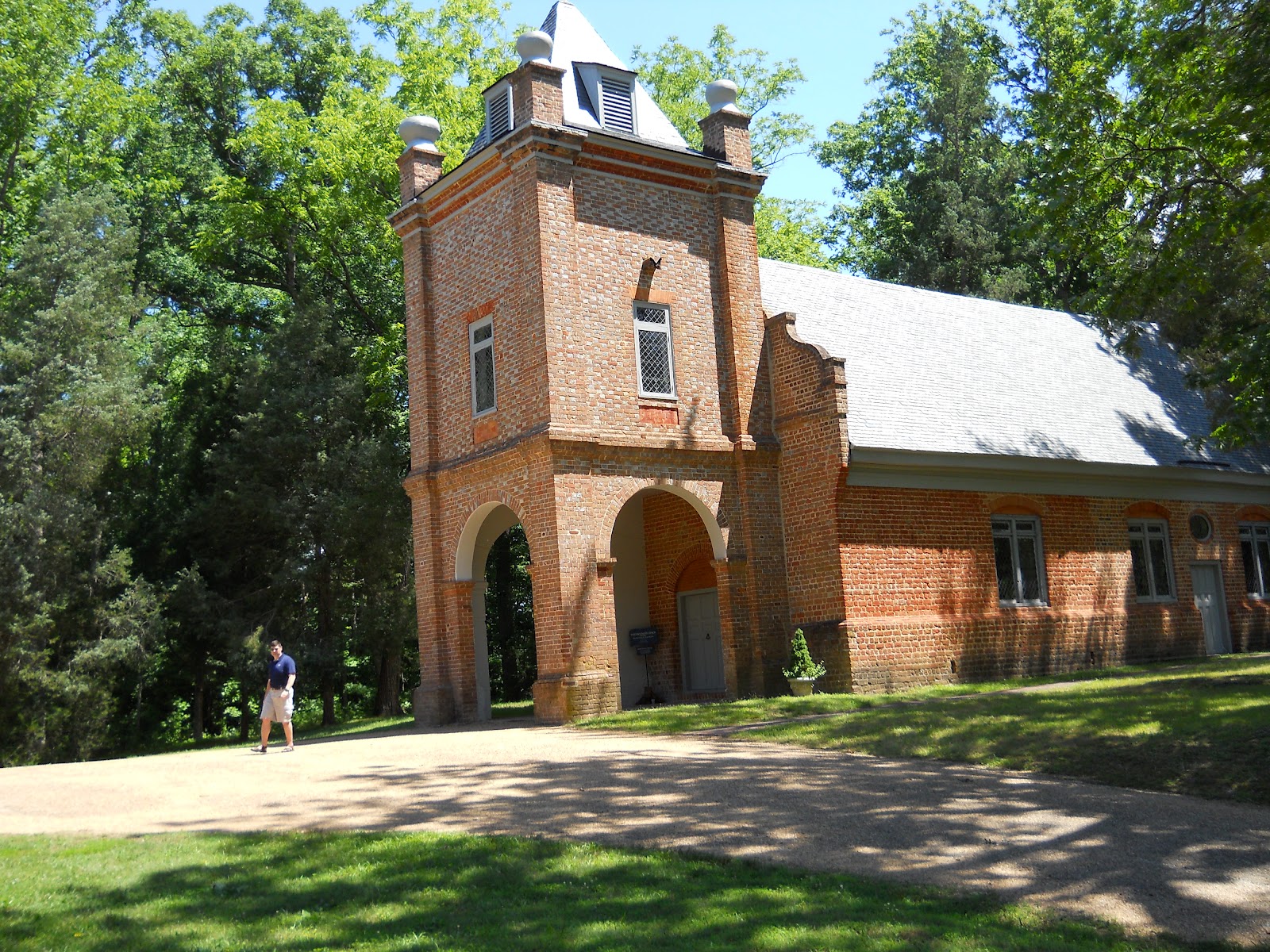
While in Virginia, with my Father, we stopped by the St Peter’s Church in New Kent County Virginia … the third oldest Church in Virginia.  As we looked through the Parish Register (1680-1787) we discovered several other Askews that were present in Colonial Virginia.  These entries were as follows:

Page 53
Sarah Askew departed this Life Jany. ye 16, 1709-10.
Jno Askew Departed this Life ye 25th February, 1719.
Page 54
Alexr. son of Jno Askew Dyed Decemr ye 20th, 1726.
Page 75
Anne ye Dar. of Jno & Anne Askew born Octr 29, baptizd Decr 3d, 1727.
Page 76
Eliz. ye Daur of Jno & Anne Askew born Jany. 13, 1729-30.
We also discovered that the above John Askew had received headrights in New Kent County of 900 acres on June 16, 1671 and 1900 acres on December 15, 1673. (Cavaliers and Pioneers, Abstracts of Virginia Land Patents and Grants, Compiled by Marion Nell Nugent)  This record places his arrival in the Virginia Colony in the early 1670’s.
A headright is a legal grant of land to settlers. Headrights are most notable for their role in the expansion of the thirteen British colonies in North America; the Virginia Company of London gave headrights to settlers and the Plymouth Company followed suit. The headright system was used in several colonies, including Maryland, Georgia, North Carolina and South Carolina. Most headrights were for 1 to 100 acres (0.40 km2) of land, and were given to anyone willing to cross the Atlantic Ocean and help populate the colonies. (Wikipedia)
A little history on St Peter’s Church, “St. Peter's Church was established in New Kent County, Virginia, on April 29, 1679. Construction began in 1701 and was complete by 1703.  One of St. Peter's vestrymen, Colonel Daniel Parke Custis, married Martha Dandridge in June 1749. She became a widow after only eight years of marriage. On January 6, 1759, the Rector of St. Peter's, Rev. David Mossom, united Martha Custis and Colonel George Washington in marriage. Debate ensues over the exact location of the marriage; some believe it occurred within the church while others believe it took place a few miles away at the White House Plantation on the Pamunkey River.  Following the American Revolution, the church was abandoned and fell into disrepair. Sometime around 1820, Presbyterians started worshiping at the church. Episcopalian services began again in 1843. Both denominations shared the church, alternating weeks, until 1865.  Being centrally located in New Kent County, the church suffered greatly during the Civil War. Union soldiers stabled their horses in the pews and carved their names in the brick exterior. On October 23, 1869 General Robert E. Lee wrote “St. Peters is the church where General Washington was married and attended in early life. It would be a shame to America if allowed to go to destruction.” His son, General William Henry Fitzhugh Lee oversaw the partial restoration in 1872. After being designated as “The First Church of the First First-Lady” by the Virginia General Assembly in 1960, restoration again began on the church with the assistance of architectural and ecclesiological experts. The renovation required making structural improvements to the church and completely gutting the interior.” (Wikipedia)
We also discovered that the St Peter’s Church registry mentions a Thomas Askew and Joseph Askew. Little else is known of these New Kent County Askews or if they are related to the Isle of Wight Askews or what has become of their decendents.   What we do know is that we have another mystery to solve and more Ghosts to Chase.

St Peter's Church, New Kent County, Virginia during our visit

Thursday, January 5, 2012

Virginia Colonists – Isle of Wight

This past Summer I was able to travel with my father to the Isle of Wight County near Smithfield, Virginia.  We spent our time finding former locations of our ancestors and researching records at the Isle of Wight Court House.  This blog will cover the first Askew colonists, our discoveries and places we visited while ‘chasing the family ghosts’ in Virginia. 

The first Askew found is William Askew, who arrived on the ship Prosperous in May 1610.  He is also mentioned in the ‘Muster of the Inhabitants of Virginia” in 1624 which is a listing of the adventurers or stockholders of the Second Charter of the Virginia Company, London, England.  He is listed as age 30 and founded a section of land named Sherley One Hundred in Nancemond which later became Isle of Wight.  No other references to this William Askew could be found.  

Looking at the history of the area, we discovered that tobacco was introduced to the region in 1612 and became the primary cash crop in the Isle of Wight, almost all goods were purchased or priced in comparison to pounds of tobacco.  In 1619 approximately only 1000 colonists were present in Virginia by 1700 the population had greatly expanded to a population of 58,000 making it the most populous colony of the English Colonies in America. (Some Askew Family History by Earl Scott Glover).  The Askews were some of the first colonists to Virginia.  In 1635 the population of Isle of Wight was 520 and by 1658 the population had grown to 2019 colonists. 

An interesting find was discovered in the Virginia Immigrants and Adventurers, 1607-1635, A Biographical Dictionary by Martha W. McCartney.  It lists two similar entries for a John Askew (Ascue) the first states, “On August 19, 1618, the justices of Bridewell Court decided to send John Askew (Ascue), a vagrant from the Bridge Ward, to Virginia.  The second entry states, “On February 27, 1619, it was decided that John Askew (Ascue), one of the youngsters rounded up from the streets of London, would be sent to Virginia.”  Little else was found on this particular John Askew. 

Later, John Askew (different from the John Askew mentioned above), who is believed to be the direct ancestor for our branch of the family, born in England in 1638, arrived at the Virginia colony in 1653.   It is known that he settled in Isle of Wight Virginia and married Bridget Smith in 1662. A search of the records revealed the following: Francis Morrison grants 200 acres to John Askew on April, 5 1662.  John sells 200 acres of land to Nicholas Smith on January 12, 1668 and sells cattle to Nicholas Smith on January 2, 1670.  He sells a gelding to William Bodie in January 1, 1672.  In January 14, 1673 sold land to William Bodie.  John died on August 23, 1683 in Isle of Wight, VA.  It is possible that John may have been related to the William Askew mentioned above.   

John and Bridget Askew had two sons John and Nicholas Askew.  Nicholas being my direct ancestor was born 1665 at Isle of Wight, Virginia.  A search of the records revealed Nicolas to have paid 99,000 lbs of Tobacco thru October 1694 to purchase the plantation of Thomas Oglethorpe, 170 acres, Nicholas resided at the Orglethorpe plantation at the time of the deed.  He lived his entire life in Isle of Wight, married Sarah Ogelthorpe in 1694 and died in 1751. 

Nicholas and Sarah had two sons, Thomas (b.1700 – d.unk) and Aaron Askew (b.1705 – d.1771).  These two brothers were born in Isle of Wight and migrated to North Carolina, more than likely in search of more fertile soil for tobacco crops, they settled in what would later be Bertie County, North Carolina. Thomas was my direct ancestor.    

Historical Map of Isle of Wight County depicting the location of John Askew’s property
Samuel L. Askew Jr. (my father) as close to the location of John Askew’s property as possible based on the above map
At the Old Isle of Wight Courthouse in Smithfield

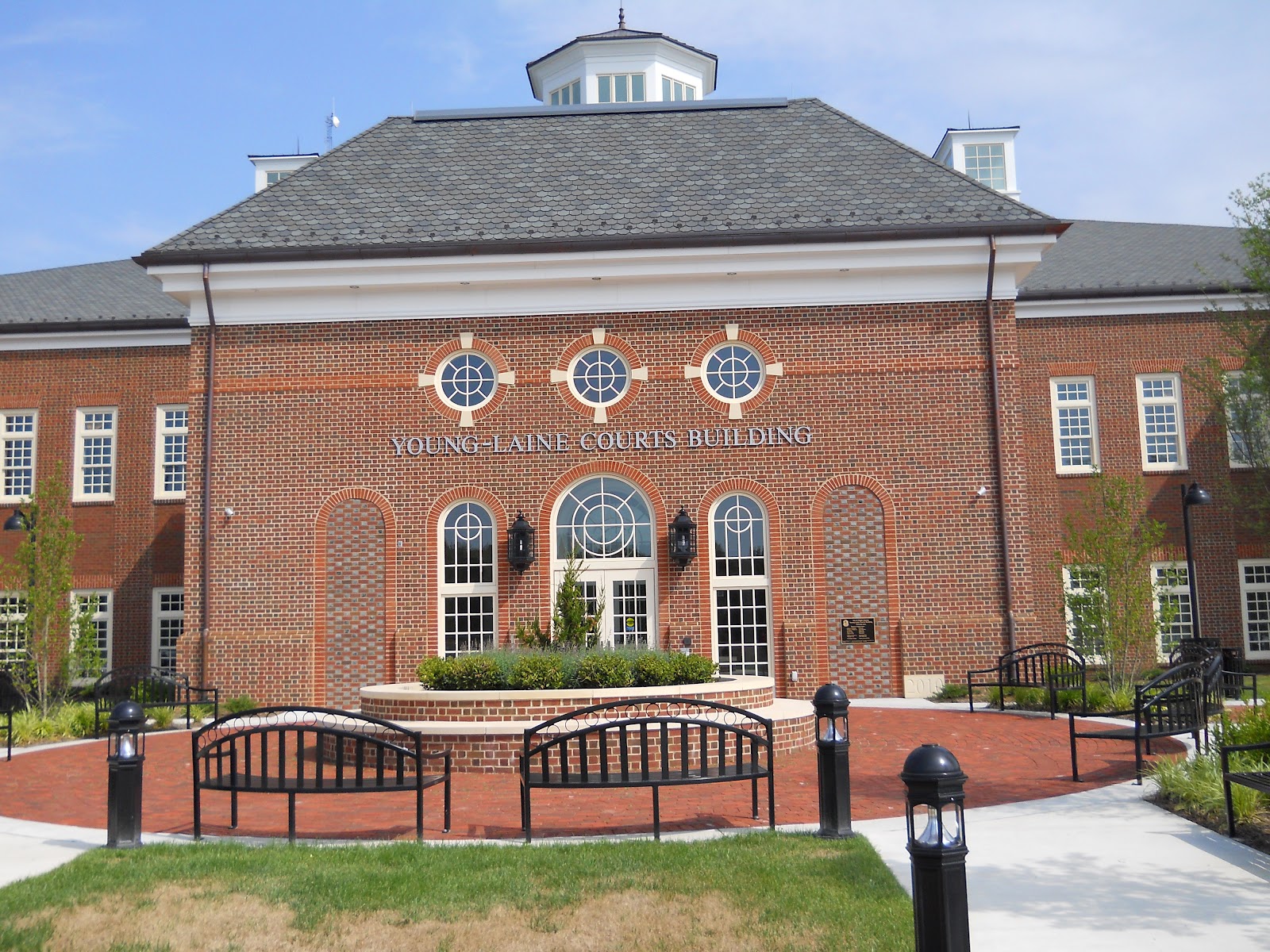
Current Isle of Wight Courthouse where archived records are maintained
One of the records of John Askew located at the Isle of Wight Courthouse … this record depicts an appraisal of his estate dated August 23, 1683