Friday, December 23, 2011

G. W. Askew and Blythe’s Mississippi Regiment (44th Mississippi Infantry Regiment)

In 1860, my GGGrandfather, George Washington Askew, was 22 years old and a recent graduate from University of North Carolina (Chapel Hill), had just returned to the family farm in Lowndes County, Mississippi. On January 9, 1861, Mississippi became the second state to secede from the Union and on February 28, 1861, George enlisted at Columbus, MS, as a private in Captain Butler’s Company of the 5th Regiment, 1st Brigade of Mississippi Volunteers.  His company was known as the Tombigbee Rangers which was raised from volunteers within Lowndes county.  The seceded states became the Confederate States of America with the ratification of the Confederate constitution on March 11, 1861.  On August 8th of the same year, George’s unit was mustered into Confederate Service as Blythe’s Mississippi Regiment, named after the commander, Lieutenant Colonel Blythe.  A review of George’s service record places him and his unit at New Madrid, Missouri on August 8, 1861.  On September 7, 1861, Blythe’s Mississippi regiment was assigned to the brigade of General B.F. Cheatham, near New Madrid. Later, Preston Smith commanded the brigade within Cheatham's Division.

It is interesting to note that one of George’s early company commanders was Captain J. H. Sharp, who later became a General during the Civil War, and George’s younger brother, Joseph married General Sharp’s daughter after the war.  Both J. H. Sharp and Joseph Askew were involved in Mississippi politics during the reconstruction period.

Cheatham’ Division defeated Union forces under the command of U.S. Grant at Belmont, Missouri.  On November 6, Grant moved by riverboat from Cairo, Illinois, to attack the Confederate fortress at Columbus, Kentucky. The next morning, he learned that Confederate troops had crossed the Mississippi River to Belmont, Missouri. He landed his men on the Missouri side and marched to Belmont. Grant's troops overran the surprised Confederate camp and destroyed it. However, the scattered Confederate forces quickly reorganized and were reinforced from Columbus. They then counterattacked, supported by heavy artillery fire from across the river. Grant retreated to his riverboats and took his men to Paducah, Kentucky. Blythes Mississippi Regiment participated in the repulse of the Union forces.  Preston Smith reported that the men of his brigade "displayed the greatest coolness and determined courage, and although under fire for the first time, bore themselves like veterans, sustaining the reputation of Tennesseans and Mississippians on the glorious battle-fields of New Orleans and Buena Vista." The regiment took part in the attack on the gunboats as Grant was re-embarking.  The Confederates viewed Belmont as a Southern victory, since Grant had staged a demonstration and been driven off. Union losses were 607 (120 dead, 383 wounded, and 104 captured or missing). Confederate casualties were slightly higher at 641 (105 killed, 419 wounded, 106 captured, and 11 missing).

On March 9, 1862, the regiment was listed in Preston Smith's Brigade of Polk's grand division.

Blythe's Regiment participated in the Battle of Shiloh, April 5-6, 1862.  General Bushrod Johnson commanded during the battle and mentioned the command in his reports. In describing the actions of the brigade, April 6, General Cheatham said, "Blythe's Mississippi advanced to the left and attacked the enemy, and, wheeling to the right, drove one of the enemy's batteries, with its support, from its position; but as it advanced upon the enemy Colonel Blythe was shot dead from his horse while gallantly leading his regiment forward in the charge. Within a few minutes of his fall Lieutenant Colonel David L. Herron and Captain R. H. Humphreys, of the same regiment, both officers of merit, were mortally wounded and the command devolved on Major James Moore, under whose direction the regiment was actively engaged during the remainder of the day and throughout the subsequent action of the 7th. The regiment at all times eminently manifested the high spirit which has always characterized the soldiers of Mississippi and no braver soldier than its heroic leader was lost to our cause." Col. Preston Smith, who took command of the brigade after Johnson was wounded, found about 200 men of Blythe's Regiment fit for duty in the next engagement, but they were of such quality that they were entrusted alone with the support of a battery after the other regiments had fallen back for ammunition. With Marcus J. Wright's Tennessee Regiment and Joe Wheeler's Alabamians they reinforced Chalmers in time to take part in the last desperate charge against overwhelming odds.

While at Corinth, on April 26, the regiment was transferred to Trapier's Brigade of Withers' Division, Braggs' Corps. In the reorganization under General Bragg, the regiment was assigned to Chalmers' Brigade.  George remained with the 44th Mississippi until he was elected 2LT at Camp Hardee, Columbus, MS and joined F Co, 42nd Alabama Infantry Regiment in May 1862.   Blythe’s Mississippi Regiment was designated the 44th Mississippi Infantry Regiment on June 6, 1863 and continued through the remaining portion of the war.

Portion of the Original Muster Roll of the Tombigbee Rangers


Portion of the Original Muster Roll of the Tombigbee Rangers depicting George W. Askew Age 23


Original Battle Flag of the Tombigbee Rangers, on display at the Stephen D. Lee house in Columbus, Mississippi


At Shiloh National Battlefield Park where Blythes Mississippi Regiment was engaged


At Shiloh National Battlefield Park where Lieutenant Colonel Blyth was Killed In Action


Sunday, January 2, 2011

Early Mississippi Settlers

Mississippi became the 20th state to join the Union on December 10, 1817. However, at that time, much of North Mississippi was considered Indian Territory and not open for settlement. In 1820 the Treaty of Doak's Stand opened up much of Central and West Mississippi to settlement but, the North was still considered Chickasaw and Choctaw lands not yet open for settlement. In 1830, government officials meet with the Choctow tribe at Dancing Rabbit Creek in Eastern Mississippi and they ceded their tribal lands in the Treaty of Dancing Rabbit Creek, signed on September 7, 1830. In exchange they were given lands in present-day Oklahoma to which most of them moved. Settlers began moving into the region, which includes what is now the county of Oktibbeha. The county takes its name from the creek in the northern part of the county which formed part of the boundary between the Choctaw and Chickasaw Nations. Oktibbeha, in the Choctaw language, means "icy water."


In 1832 the Chickasaw Tribe ceded their land in the Treaty of Ponotoc Creek and opened up the remaining territory in Oktibbeha County for settlement. Oktibbeha County was formally organized on December 23, 1833. With the opening of these former tribal territories, the population of Mississippi increased 175% from 1830 to 1840. The price for land in this new territory, when purchased directly from the US Government was $1.25 an acre for minimum blocks of eighty acres.

My first direct ancestor to settle in Mississippi was David Outlaw Askew, my GGGGrandfather. He was born on 31 January 1794 in Duplin, NC (Bertie County). He had served in the State Legislator as a representative of Hertford County North Carolina for 1827 and 1828; at the time he resided at Pitch Landing in Hertford County. The Askew and Outlaw families of North Carolina were closely related planter families. As one family migrated from North Carolina to Mississippi, in order to develop more farmland, so did the other. Both families settled in the same area of Oktibbeha County.


Outlaw Home built during the early 1830s
David Outlaw Askew married Martha Etheridge, daughter of William Etheridge. David O. Askew purchased land in Oktibbeha County during November 1846, a total of 240 acres acquired for the sum of $250.00 dollars. On 25 January 1847, he purchased another 973 acres for the sum of $5,841.72 dollars.

David Outlaw Askew died on 13 May 1849 and is buried in a family plot, near the land he purchased. A few years ago, I had the opportunity to visit the site and find my GGGGrandfathers grave.


Askew-Harvey Cemetery

Me and my daughter at David O. Askew (GGGGrandfather) Gravesite
In 1850 only 12% of Mississippians were born in Mississippi, 83% had migrated to Mississippi from other states as the tribal territories opened, the remaining 5% were of foreign birth. North Carolina provided the majority of Mississippi settlers, which proved to be true for my ancestors, followed by South Carolina, Tennessee, Virginia, Georgia, Alabama, and Kentucky. (From "Mississippi a Bicentennial History by John Ray Skates")

David O. Askew willed all his property to his wife Martha Etheridge and their five children. Martha was also from Bertie County North Carolina. She married David Outlaw Askew and migrated with the family to Mississippi in 1846. After the death of her husband David O. Askew, Martha E. Askew purchased additional property in October, 1852 for the sum of $800.00 dollars, to include several lots in the town of Columbus, Mississippi. She must have been a strong willed lady to manage so much during the mid 19th Century, an extremely tumultuous time for the South.

During the pre-Civil War years Oktibbeha County developed into an area of small farms with a number of large plantations. The agricultural base was cotton and livestock. The 1860 census revealed a population of 5,171 whites, 7,631 slaves, 18 free blacks, and 157 Indians.

The Civil War was hard on Oktibbeha County as it was on the rest of Mississippi. Large numbers of its men volunteered for Confederate service and the farms suffered. Martha’s sons were George Washington Askew, Joseph Holly Askew, and David Askew. Two of which joined the Confederate Army … please refer to my previous Blogs for more on these two sons.

Grierson's raiders came through the region in the spring of 1863 and looted Starkville. Another Union raid the following year was turned back just south of West Point by General Nathan Bedford Forrest.

After the Civil War, Martha Askew moved into the town of Columbus where she lived until her death in June 1890. She is buried in the Askew family plot of Friendship Cemetery, Columbus, Mississippi.


Saturday, December 25, 2010

G.W. Askew and Winter 1863-1864 at Dalton, Georgia

After being released from Parole Camp at Demopolis, Alabama; First Lieutenant G. W. Askew and the 42nd Alabama moved to join Braxton Bragg’s Army of Tennessee near Chattanooga. Although the regiment didn’t arrive in time to participate in the Battle of Chickamauga, the unit joined the siege forces around Chattanooga during October 1863, fully participating in the Battles of Lookout Mountain and Missionary Ridge. For more on the 42nd Alabama’s participation in these battles, please feel free to read my recently published article by clicking this link … The 42nd Alabama at Chattanooga

After these two disasters … Braxton Bragg was replaced with Joe Johnston and the Army of Tennessee went into Winter Camp at Dalton, Georgia. Joe Johnston immediately began repairing and refitting his new command.


Railroad Depot at Dalton, Georgia


A Confederate soldier, John S. Jackman, recorded on 18 January 1864 the state of the Army of Tennessee while at Dalton, Georgia, “The old year closed down upon us with defeat, disaster. May the present year bring us victory and success. The hour is dark and full of gloom, but such generally comes before the dawning of a beautiful day.” He continues with, “The winter is wearing away, and soon our battle flags will have to be unfurled to the breezes of spring, and the lines of gray will have to be drawn up---a living wall, against which the tide of invasion, it is hoped, will beat in vain.” (John S. Jackman, Diary of a Confederate Soldier, edited by William C. Davis, University of South Carolina Press, Columbia, 1990)

While in Winter Camp, not only did Joe Johnston refit his army materially, he also refit his army spiritually; sponsoring a ‘great revival’. Bibles were distributed, Chapels constructed, and sermons prepared. Most 42nd Alabama soldiers participated in the revivals, a common occurrence within the Army of Tennessee.

“Preaching was kept up in Dalton every night except four for nearly four months, and in the camps all around the city preaching and prayer meetings occurred every night. The soldiers erected stands, improvised seats, and even built log churches, where they worshipped God in spirit and in truth. The result was glorious; thousands were happily converted and were prepared for the future that awaited them. Officers and men alike were brought under religious influence.” (Virginia Wood Alexander, Religious Life In The Army Of Tennessee. The United Daughters Of The Confederacy Magazine. May 1988. Page 52)

During this revival the Reverend James P. McMullen, minister of the Pleasant Ridge Church of Greene County, Alabama and acquaintance of Lieutenant Colonel Lanier joined the 42nd Alabama at Dalton. His son, William F. McMullen, was a member of the 36th Alabama Infantry, one of the 42nd Alabama’s sister regiments in the same brigade. Reverend McMullen continued as the Chaplain of the 42nd Alabama until he became a fatality during the Battle of Resaca on May 15, 1864. While in Winter Camp, my GGGrandfather probably participated in these revivals and attended the services conducted by Reverend McMullen.

G.W. Askew's Pay Voucher for October and November 1863

G.W. Askew's Pay Voucher for December 1863
G.W. Askew was paid $180 dollars on December 22, 1863 for the period of October 1 through November 30, 1863; certainly a very difficult period, in which I am sure he more than earned his $90 dollars a month. He must have also had the rare opportunity to spend some time back home in Mississippi; his payroll receipt for December 1863 lists him as ‘On Furlough’ when the payroll was distributed on January 15, 1864. In March 1864, G.W. Askew served as a character witness for 1LT E. A. Portis of Company K, 42nd Alabama, who was seeking a discharge due to medical disabilities after nearly three years of continuous hardship. My GGGrandfather testified:

“I have known Lieutenant E. A. Portis Co K 42nd Alabama Regiment as an officer since June 1862 and have never known him to avoid duty or fail to carry out orders when in health. He has suffered a great-deal from his disease. And I have known him to do duty and have been on duty with him when suffering from his disease, and when excused by the surgeon. He is in my opinion, in every way efficient and capable of performing the duties of an officer when not suffering with his disease. Lieutenant Portis has never been court-martialed or reprimanded by a superior officer for anything.”

G.W. Askew's testimony
E.A. Portis was discharged in May 1864 … G.W. Askew remained in Dalton until the Spring of 1864, when William T. Sherman began his opening moves of what would become known as the Campaign for Atlanta. The tranquility of Winter was broken as the 42nd Alabama once again faced combat at Mill Creek Gap during the Battle of Rocky Face Ridge on 7-12 May 1864.

Saturday, December 4, 2010

G.W. Askew and the University of North Carolina at Chapel Hill Class of 1860


George W. Askew was a graduate of the Class of 1860 from University of North Carolina at Chapel Hill.  Of the 93 graduates, 92 served in the Confederate States Army.  This number provides a great testimonial to the capacious impact of the American Civil War to our society.  We were fortunate to discover a program from the Reunion of the Class of 1860 at Chapel Hill dated June 15, 1920. 


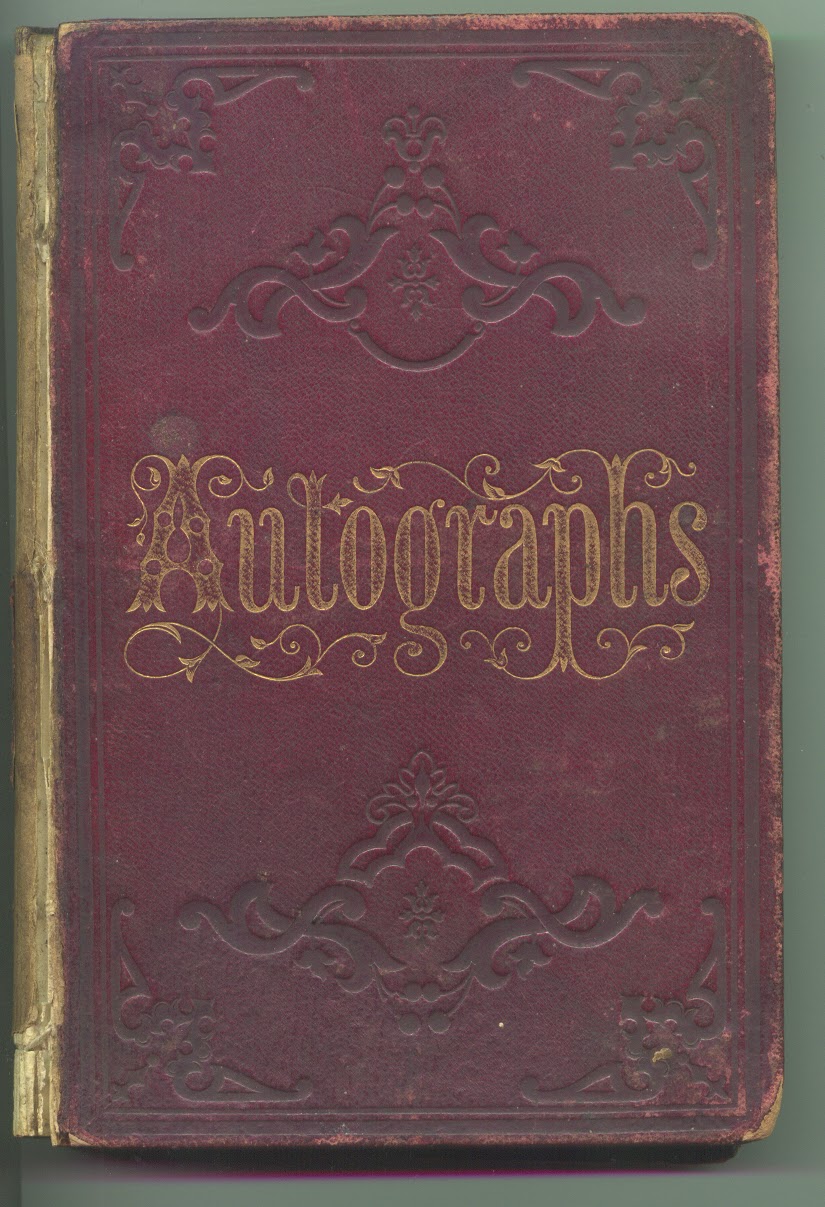
My ggrandfather must have cherished his memories of Chapel Hill and his classmates.  He maintained an autograph album of his fellow classmates and would include an entry of any information that he obtained on each individual.  Displayed is G.W. Askew's autograph album with an entry on George S. Martrie, Classmate Di Society, who was killed in action on September 21st, 1863 ‘in North Alabama by bush whackers’.    


It is interesting to note that the reunion program lists G.W. Askew as a Captain of a Mississippi Regiment.  G.W. Askew originally enlisted with the 44th Mississippi in 1861, prior to serving in the 42nd Alabama.  It is possible that he may have returned to a Mississippi Regiment toward the end of the war.   I will need to do some additional research or 'chasing the family ghosts' to track this down. 

Just a little additional history on the University of North Carolina at Chapel Hill:

Charted by the North Carolina General Assembly on December 11, 1789, the university's cornerstone was laid on October 12, 1793, near the ruins of a chapel, chosen because of its central location within the state. It was originally known as simply the University of North Carolina. Beginning instruction of undergraduates in 1795, UNC is the oldest public university in the United States and the only such institution to confer degrees in the eighteenth century. During the Civil War, North Carolina Governor David Lowry Swain persuaded Confederate President Jefferson Davis to exempt some students from the draft, so the university was among few in the Confederacy that managed to stay open. 


Sunday, September 12, 2010

1LT G.W. Askew's Vicksburg Parole Certificate

As my father, brother, and I began our initial research into our family history … we didn’t have a lot of information. My father visited a distant cousin and was able to obtain access to several original documents. One of which was the original Vicksburg Parole certificate for 1st Lieutenant George Washington Askew of the 42nd Alabama dated July 10, 1863 and signed by a paroling officer from an Illinois Regiment. These were issued to Southern soldiers shortly following the July 4, 1863 Confederate surrender. Initially both the U.S. and Confederate governments relied on the traditional European system of parole and prisoner exchange. The terms called for prisoners to give their word not to take up arms against their captors until they were formally exchanged for an enemy captive of equal rank. These exchanges were completed on paper … while the soldiers remained in their unit Parole camp until formally exchanged. Later the parole system was abolished and the Prison Camp system was established by both sides during the War. On the back side is a note providing transportation and an approved 30 day leave of absence for my GGGrandfather at the end of which he will report to the Parole Camp at Demopolis, Alabama. The approved leave of absence is signed by his Regimental Commander, LTC Thomas Lanier on July 20, 1863.


Of course, my GGGrandfather’s Parole Certificate captured our curiosity as to the actions of the 42nd Alabama during the campaign and siege of Vicksburg. We conducted quite a bit of research which included several trips to Vicksburg National Battlefield Park. The positions for the 42nd Alabama are clearly marked and located just behind the Visitors center near the old city cemetery. During the siege the cemetery was the approximate location of the 2nd Texas lunette. The 2nd Texas was a sister regiment of the 42nd Alabama under the brigade command of General John C. Moore. The 42nd Alabama covered the right flank portion of entrenchments for the Brigade. The road in front of the Visitors Center cuts perpendicular through the 42nd Alabama positions. Their position of entrenchments ran from the current cemetery across the road and overlooked the railroad cut of the Southern Railroad of Mississippi.


The 42nd Alabama held this position from the beginning of May through the surrender on July 4th 1863. During the period of the siege the 42nd Alabama assisted in repelling two direct assaults on 19 and 22 May. It is difficult to imagine the conditions in which these soldiers lived for the remaining time until the surrender … little food, crowding, constant bombardment, and terrible sanitary conditions. I have included a telling quote from General Moore describing the worsening conditions, "From this time to the close of the siege (forty-seven days) our men were confined to the trenches night and day under a fire of musketry and artillery, which was often kept up during the whole night as well as the day. Only those who were a near witness of the siege of Vicksburg will ever have a true conception of the endurance and suffering of these men, who stood at their post until overpowered, not by the enemy, but by the wants of nature. Those who only think and read of the siege, and those who witnessed and shared its trials, may perhaps form widely different conceptions of its nature. Some idea may be formed of the artillery fire to which we were exposed, when I state that a small party sent out for that purpose collected some two thousand shells near and in rear of the trenches occupied by our brigade."

For more information of the 42nd Alabama’s participation in the campaign and siege of Vicksburg please feel free to read my web published articles.

The 42nd Alabama and the Campaigns for Vicksburg

The 42nd Alabama and the Siege of Vicksburg

Sunday, July 25, 2010

2LT G.W. Askew, the 42nd Alabama, and the Battle of Corinth


                A few years ago as I was working on my thesis involving the 42nd Alabama, I had the opportunity to visit the Battlefield at Corinth, Mississippi.  My father made the visit with me as we rediscovered the past.  Corinth was the first experience of combat for the 42nd Alabama.  The 42nd Alabama participated in the heaviest portions of the battle from 3-5 October 1862.  The regiment’s first combat occurred near Battery F on 3 October, the heaviest action occurred on 4 October during the attack on Battery Robinette and the unit saw its final fighting on 5 October at Davis Bridge during the retreat from Corinth.  The regiment suffered horrendous casualties over the course of these three days of constant fighting.  The severest killed-in-action rates occurred in companies A, B, and D.  Overall, the 42nd Alabama suffered 57 percent casualties, reducing the regiment from 700 to approximately 304 effectives.  The 42nd Alabama suffered the second highest casualty rate within its assigned Brigade, Commanded by General John C. Moore.  The 42nd Alabama incurred rates of 5.8 percent killed-in-action, 9.6 percent wounded-in-action, and 41 percent missing-in-action or captured.  Many of the regiment’s leaders were wounded-in-action, including the Regimental Commander, Colonel Portis and his deputy, Lieutenant Colonel Lanier.  Of the ten company commanders, Captain Foster was killed-in-action and Captain Knox died of wounds, this equated to a 20 percent killed in action rate for company commanders.  One other company commander, Captain Condry, was wounded-in-action and survived his wounds.  One First Sergeant was killed-in-action and two of ten First Sergeants were wounded-in-action.  In addition, one lieutenant was killed-in-action and six were wounded-in-action, one of these wounded was my GGGrandfather, G. W. Askew of F Company.  I have included a few eye witness accounts of the bloody action experienced by the 42nd Alabama.

Charles R. Labruzan, acting commander of F Company, a former Mobile Merchant, husband and father of four, described the scene near Battery Robinette: 

We were met by a perfect storm of grape, canister, cannon balls and minnie balls.  Oh God! I have never seen the like! The men fell like grass even here.  Giving one tremendous cheer, we dashed to the brow of the hill on which the fortifications are situated…I saw men, running at full speed, stop suddenly and fall upon their faces, with their brains scattered all around; others, with legs and arms cut off, shrieking with agony.  They fell behind, beside, and within a few feet of me.  (Oscar L. Jackson, The Colonel’s Diary. Sharon, PA, 1922, p. 71)

Lieutenant Jefferson R. Stockdale described the actions of G company, “We went over the breastworks into Corinth and fought in the streets, grappling with the foe, in many instances hand to hand but overwhelming numbers forced us to retire, the killed and wounded on both sides was very great.” (The Democratic Watchtower Vol. 23, No. 40 October 28, 1862)

The 42nd Alabama culminated in the town of Corinth at the railroad junction near the Tishomingo Hotel.  At their high tide, General Moore reported that they were “overwhelmed” by “massive reserves” and “melted under their fire like snow in thaw.” (OR, 17.1, Washington, D.C.:  U.S. Government Printing Office, 1880-1901, p. 396)

For more information on the 42nd Alabama’s actions during these three days of combat, feel free to read my articles:


Monday, July 5, 2010

Sergeant Sam Snow of the 8th Mississippi Infantry, A Letter from his First Sergeant, and an Unknown Mississippi Soldier’s Grave


As my father and I began our research into our family history, my father discovered a letter of condolence which began an interesting bit of fact finding on Sergeant Sam Snow.   The Letter of Condolence is as follows:

Company G 8th Mississippi Regiment Near Cassville Georgia May 18th 1864
Miss Mary,  It is my very painful necessity to communicate to you the news.  The very sad news of the death of your Brother Sam; he fell gallantly fighting for the liberties we are all striving, he was killed at Resaca on Saturday the 14th May. Just as the sun was sinking beneath the western hills.  The Confederacy has lost one of her bravest and best boys, a more gallant boy never lived.  I have fought by his side in four battles, but alas; he is done with the trials, trouble, and tribulations of this world and I hope is now a shining angel in Heaven.  I cannot speak in tones high enough to [illegible] his courage as a soldier; it is the fate of war.  He was left on the battlefield as we were not able to hold it.  Lt. Clark also fell a victim to that  “sad monster death”.  I do indeed sympathize with you and the family in your loss; as He was to me almost as a Brother, and I consider I have lost one of my best friends.  You have my sympathy.  I am Miss Mary Yours Respectfully Frank E. Hough 


During the course of our research we discovered that Samuel N. Snow was born on October 24, 1839 and was the older brother of my GGGrandmother Rachel Henritta (Snow) Askew.  He was the oldest sibling of a very large family.  He had a younger sister Mary F. Snow, who was the oldest of seven sisters and only two years younger than Sam.  


Sam volunteered on July 13, 1861 and mustered into Company G “Tolson Guard” of the 8th Mississippi Regiment at the age of 21.  He was later promoted to 4th Sergeant on April 20th, 1863.  Company G was first organized at Fellowship Church and mustered into state service at Buckley's Store in the Fellowship Community of Jasper County, Mississippi on July 17, 1861.  The 8th Regiment was subsequently mustered into Confederate service in early October and immediately sent to Pensacola, Florida where it defended against the Union held Fort Pickens through the remainder of 1861.   In May, 1862 the regiment was ordered to Mobile, Alabama and during December, 1862 participated in the Battle of Murfreesboro, Tennessee where it suffered its first battlefield casualties of the war.  The regiment remained stationed at Bridgeport, Alabama until July 1863.  In September, the regiment was engaged in some of the heaviest fighting of the Battle of Chickamauga during which it 'liberated' three pieces of artillery and five horses from the Union Army.  The unit participated in the Siege of Chattanooga and the battles of Lookout Mountain and Missionary Ridge during November 1863, sustaining heavy casualties.  Following these engagements, the regiment went into winter quarters at Dalton, Georgia with the Army of Tennessee under the command of General Joe Johnston.  As Sherman began his advance toward Atlanta and flanked Joe Johnston out of Dalton; Johnston attempted to confront Sherman at Resaca.  The Battle of Resaca began on May 13th 1864; the 8th Mississippi was assigned to W. H. T. Walkers Division of 1st Corps and participated in some of the most severe fighting of the battle. Sam Snow was killed in action on May 14th.  The only two casualties for Company G at Resaca were Lieutenant Lewis M. Clark and Sergeant Samuel N. Snow. 

A few years ago my brother had the opportunity to visit the Resaca Cemetery … he discovered Lieutenant Clark’s headstone and only a few yards from Lieutenant Clark’s headstone, near the back wall of the cemetery, was the headstone of an unknown Mississippi Soldier.  Could this be the final resting place of Sergeant Samuel N. Snow?