Wednesday, February 8, 2012

My British Isle Heritage


Several of my earlier posts referenced my heritage from the British Isles …   
I thought I would write about some of my possible ancestors in England ….
The earliest geographic location of the Askew family is Northern England, the name appears in both Cumberland and Lancanshire County England.   The earliest Askew’s can be dated back through property records.  Thurston de Bosco received from the Lord of Kirksanton, Aikskeugh (Askew) or Oakwood in 1202-3. It is certain that William, son of Guy Boyville granted lands in Kirksanton and Silecroft, near the two standing stones, to John, son of John of Aykescowgh (Askew). Sir Robert Mulcaster and Joan his wife and Margaret de Bampton granted 1403 to Richard de Ayscough their lands in Lacra and Scales. These estates descended to Matthew Ayscough* (Askew) who gave them to his son Richard in 1478. They descended to Hugh Askew (1558-1625) who married Elizabeth (1560-1649).   
Sir William Askew, possibly the son of Richard Askew, was knighted by Henry the VIII in 1513 at the age of 24 of Stallingsborpugh, Lincolnshire, England.  Sir William Askew was a commissioner in Lincolnshire county during the Louth Rising against King Henry VIII .  Sir William Askew is the father of Anne Askew, discussed in a previous Blog article. 
Sir Hugh Askew is believed to be the son of Sir William Askew and brother to Anne Askew.  Sir Hugh Askew was granted two estates by Henry the VIII, Marsh Grange and Seaton Priory in the year 1542. Marsh Grange was granted to the Askew Family or (Ascough, Asketh, or Askey) by Henry the VIII in the year 1542.  In 1547 he was created knight-banneret at Musselburgh, in Scotland, after the battle of Pinkey.  A brass plate on the wall of a church in Bootle, England bears the effigy of Sir Hugh Askew, who, as the inscription says, was knighted at the battle of Musselburgh, in 1547, and died in 1562. He married into a noble family, his wife being a cousin to Queen Jane Seymour, mother of Edward the Sixth.  He died leaving no children.    His estates in Lancashire then became the property of his nephew, William Askew (possible son to Anne Askew the martyr) and a niece named Bridget Askew.  Marsh Grange fell to William Askew and Seaton Priory to Bridgett Askew who later married a Pennington. 
According to the Lancashire County, Dalton in Furness - Parish Register, 1565-1620, John Askew married  Margaret Pyper on 08 Feb 1612.  John was possible son of William Askew (Son of Anne the martyr) and was buried in Lancashire County, Dalton in Furness on 25 May 1691.
One possible reason for the Askew migration from England was the English Civil War which occurred in England in the mid-17th century, between the royalist and parliamentarians.  The areas of Royalist support tended to be the North, West and Wales. Royalist support would include Lancashire County and Cumberland County where the Askew family was prominent.  Parliament was supported by the richer South and East, including London.
But much more research must be conducted in order to positively identify my English Ancestors and why they decided to begin a new life in the American Colonies.  
Historic Map of Britain


Map of the Counties of Britain

Saturday, February 4, 2012

More Askews in Colonial Virginia

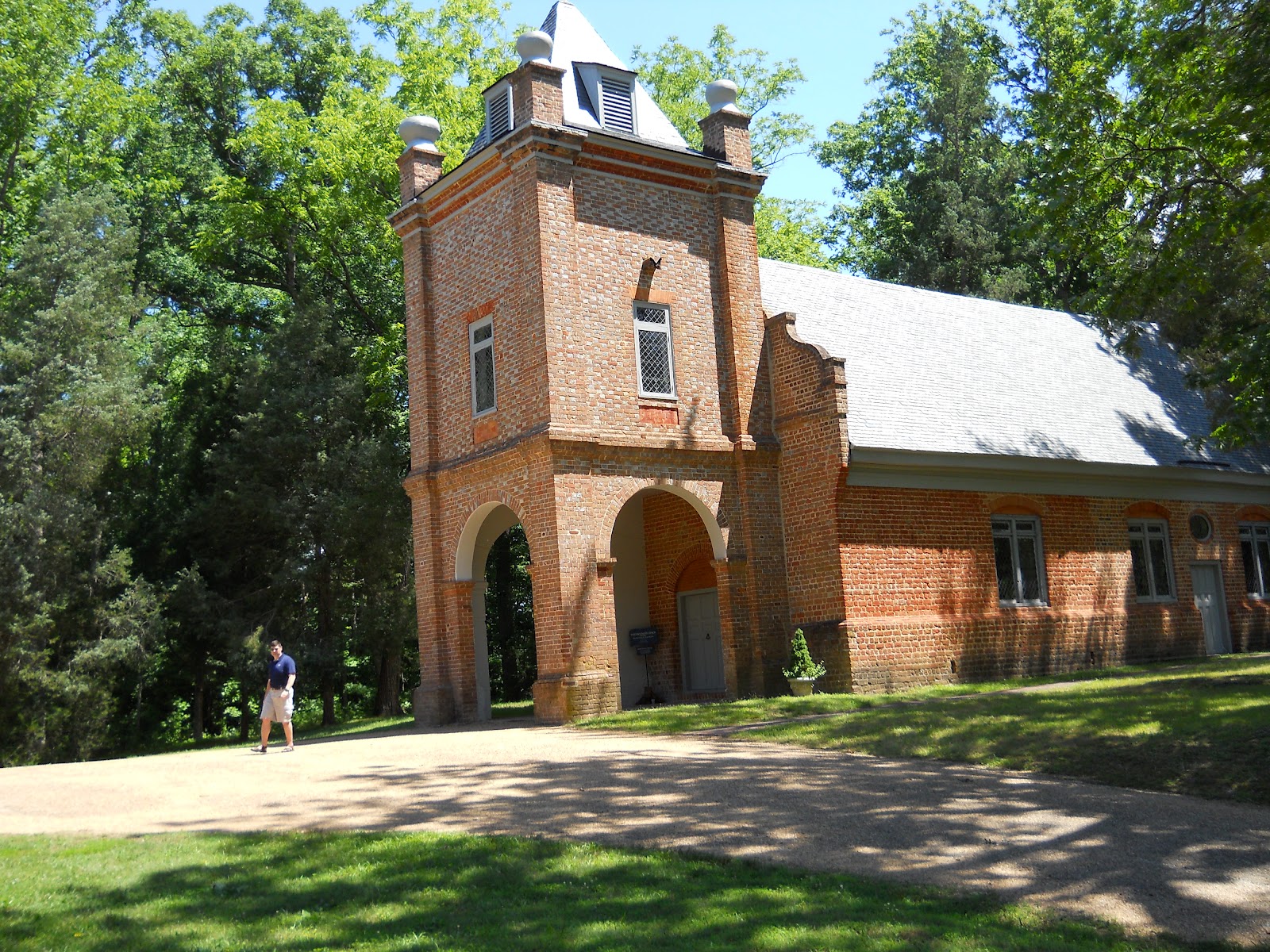
While in Virginia, with my Father, we stopped by the St Peter’s Church in New Kent County Virginia … the third oldest Church in Virginia.  As we looked through the Parish Register (1680-1787) we discovered several other Askews that were present in Colonial Virginia.  These entries were as follows:

Page 53
Sarah Askew departed this Life Jany. ye 16, 1709-10.
Jno Askew Departed this Life ye 25th February, 1719.
Page 54
Alexr. son of Jno Askew Dyed Decemr ye 20th, 1726.
Page 75
Anne ye Dar. of Jno & Anne Askew born Octr 29, baptizd Decr 3d, 1727.
Page 76
Eliz. ye Daur of Jno & Anne Askew born Jany. 13, 1729-30.
We also discovered that the above John Askew had received headrights in New Kent County of 900 acres on June 16, 1671 and 1900 acres on December 15, 1673. (Cavaliers and Pioneers, Abstracts of Virginia Land Patents and Grants, Compiled by Marion Nell Nugent)  This record places his arrival in the Virginia Colony in the early 1670’s.
A headright is a legal grant of land to settlers. Headrights are most notable for their role in the expansion of the thirteen British colonies in North America; the Virginia Company of London gave headrights to settlers and the Plymouth Company followed suit. The headright system was used in several colonies, including Maryland, Georgia, North Carolina and South Carolina. Most headrights were for 1 to 100 acres (0.40 km2) of land, and were given to anyone willing to cross the Atlantic Ocean and help populate the colonies. (Wikipedia)
A little history on St Peter’s Church, “St. Peter's Church was established in New Kent County, Virginia, on April 29, 1679. Construction began in 1701 and was complete by 1703.  One of St. Peter's vestrymen, Colonel Daniel Parke Custis, married Martha Dandridge in June 1749. She became a widow after only eight years of marriage. On January 6, 1759, the Rector of St. Peter's, Rev. David Mossom, united Martha Custis and Colonel George Washington in marriage. Debate ensues over the exact location of the marriage; some believe it occurred within the church while others believe it took place a few miles away at the White House Plantation on the Pamunkey River.  Following the American Revolution, the church was abandoned and fell into disrepair. Sometime around 1820, Presbyterians started worshiping at the church. Episcopalian services began again in 1843. Both denominations shared the church, alternating weeks, until 1865.  Being centrally located in New Kent County, the church suffered greatly during the Civil War. Union soldiers stabled their horses in the pews and carved their names in the brick exterior. On October 23, 1869 General Robert E. Lee wrote “St. Peters is the church where General Washington was married and attended in early life. It would be a shame to America if allowed to go to destruction.” His son, General William Henry Fitzhugh Lee oversaw the partial restoration in 1872. After being designated as “The First Church of the First First-Lady” by the Virginia General Assembly in 1960, restoration again began on the church with the assistance of architectural and ecclesiological experts. The renovation required making structural improvements to the church and completely gutting the interior.” (Wikipedia)
We also discovered that the St Peter’s Church registry mentions a Thomas Askew and Joseph Askew. Little else is known of these New Kent County Askews or if they are related to the Isle of Wight Askews or what has become of their decendents.   What we do know is that we have another mystery to solve and more Ghosts to Chase.

St Peter's Church, New Kent County, Virginia during our visit

Wednesday, January 25, 2012

Sam Snow – Setting the Record Straight

I previously produced a blog entitled, 'Sergeant Sam Snow of the 8th Mississippi Infantry, A Letter from his First Sergeant, and an Unknown Mississippi Soldier's Grave' back on July 5, 2010.  The Blog referenced the possibility of Sergeant Sam Snow being interned as an unknown Confederate Soldier in the Resaca Confederate Cemetery.  Some time ago, my father and I were able to visit the Resaca Confederate Cemetery; while at the cemetery my father recalled a conversation that he had overheard as a child … that Sam Snow’s father had traveled to Georgia to recover his Son’s remains.  While in Georgia, the father recovered Sam Snow’s remains from two sisters.  While at the cemetery we read the story of Ms. Green and the story my father had heard as a child made perfect sense. 

The story of Ms. Green and the Resaca Confederate Cemetery is as follows, “After the battle, a family known as the Green family returned to their plantation and the sight that met them there was almost more than they could bear. The bodies of confederate soldiers were buried in crude makeshift graves all across the yard. Compelled by a sense of respect to those who had fallen in action, Mary J. Green and her sister began collecting the bodies to bury properly. Though poverty was rampant the Green daughters wrote friends asking for any amount money they could give. Col. John Green gave his daughters 2.5 acres (10,000 m2) of land for use as a cemetery for these soldiers. With the money collected and the land provided, the Green daughters and their mother began work on what we now call the Resaca Confederate Cemetery.” (Wikipedia)

So the search for Sergeant Sam Snow continues ….
At LT Clark's Grave

AT Resaca Confederate Cemetery
Resaca Confederate Cemetery Marker


Friday, January 20, 2012

Genealogy and Genetics

My father, brother, and I have been very successful tracing our genealogy back to 17th Century England using archival records research.  We have definitively traced our family to the North Western portion of the British Iles prior to their arrival to the Virginia colony.  I have always wanted to take the next step and determine if our family descended from one of the original Celtic tribes, such as the Picts or did my ancestors migrate from another culture to the British Isles. It has been difficult to trace our direct ancestry in Britain so the best we have been able to do is determine general relations based on family surnames and common variations.

During this past Fall I took another route and tried a DNA test through Family Tree DNA.  This test looks at the Y chromosome DNA which traces the male lineage.  DNA in the Y chromosome is passed from father to son, and Y-DNA analysis is now a growing method in genealogy research.

Generally speaking this Y-DNA analysis classifies the descendent within a Haplogroup.   A Haplogroup is defined as branches in the human genetic tree (Phylogenetic tree). They are tied to deep ancestry (think 10,000s or 10s of 1000s of years). It basically groups people based on their genetic markers to certain regions of the World.  Maps have also been developed based on archeological finds and DNA samples which trace the origins and migrations of these groups over time.

My Haplogroup turned out to be I2b1.  I was very surprised to learn that Haplogroup I2b1 is a fairly small group. It reaches its highest numbers in Germany, Denmark and the Netherlands where it can constitute as much as 10 to 12.5 percent of the population. This haplogroup most likely arrived in England with the Anglo-Saxons or Vikings. 

It is very likely that my ancestors were either from an Anglo Saxon Tribe from northern Germany that conquered the British Isles from 400-600 AD, establishing the Kingdom of Northumbria or were of Viking decent whom conquered the British Iles from 800-1066 AD. 

And now another clue has been answered; however, it has generated as many questions as answers.  We will continue to pursue the DNA approach to genealogy in order to ‘Chase the Family Ghosts’ to the farthest corners of history.  I have joined several groups through Family DNA Tree to include a group project entitled Askew Family.  Hopefully this approach will assist in unlocking answers and discovering new paths to explore.


Map depicting the Viking Invasion of the British Isles


Map depicting the Anglo-Saxon invasion of the British Isles
Map depicting the origin and migration of Haplogroup I2B


Thursday, January 5, 2012

Virginia Colonists – Isle of Wight

This past Summer I was able to travel with my father to the Isle of Wight County near Smithfield, Virginia.  We spent our time finding former locations of our ancestors and researching records at the Isle of Wight Court House.  This blog will cover the first Askew colonists, our discoveries and places we visited while ‘chasing the family ghosts’ in Virginia. 

The first Askew found is William Askew, who arrived on the ship Prosperous in May 1610.  He is also mentioned in the ‘Muster of the Inhabitants of Virginia” in 1624 which is a listing of the adventurers or stockholders of the Second Charter of the Virginia Company, London, England.  He is listed as age 30 and founded a section of land named Sherley One Hundred in Nancemond which later became Isle of Wight.  No other references to this William Askew could be found.  

Looking at the history of the area, we discovered that tobacco was introduced to the region in 1612 and became the primary cash crop in the Isle of Wight, almost all goods were purchased or priced in comparison to pounds of tobacco.  In 1619 approximately only 1000 colonists were present in Virginia by 1700 the population had greatly expanded to a population of 58,000 making it the most populous colony of the English Colonies in America. (Some Askew Family History by Earl Scott Glover).  The Askews were some of the first colonists to Virginia.  In 1635 the population of Isle of Wight was 520 and by 1658 the population had grown to 2019 colonists. 

An interesting find was discovered in the Virginia Immigrants and Adventurers, 1607-1635, A Biographical Dictionary by Martha W. McCartney.  It lists two similar entries for a John Askew (Ascue) the first states, “On August 19, 1618, the justices of Bridewell Court decided to send John Askew (Ascue), a vagrant from the Bridge Ward, to Virginia.  The second entry states, “On February 27, 1619, it was decided that John Askew (Ascue), one of the youngsters rounded up from the streets of London, would be sent to Virginia.”  Little else was found on this particular John Askew. 

Later, John Askew (different from the John Askew mentioned above), who is believed to be the direct ancestor for our branch of the family, born in England in 1638, arrived at the Virginia colony in 1653.   It is known that he settled in Isle of Wight Virginia and married Bridget Smith in 1662. A search of the records revealed the following: Francis Morrison grants 200 acres to John Askew on April, 5 1662.  John sells 200 acres of land to Nicholas Smith on January 12, 1668 and sells cattle to Nicholas Smith on January 2, 1670.  He sells a gelding to William Bodie in January 1, 1672.  In January 14, 1673 sold land to William Bodie.  John died on August 23, 1683 in Isle of Wight, VA.  It is possible that John may have been related to the William Askew mentioned above.   

John and Bridget Askew had two sons John and Nicholas Askew.  Nicholas being my direct ancestor was born 1665 at Isle of Wight, Virginia.  A search of the records revealed Nicolas to have paid 99,000 lbs of Tobacco thru October 1694 to purchase the plantation of Thomas Oglethorpe, 170 acres, Nicholas resided at the Orglethorpe plantation at the time of the deed.  He lived his entire life in Isle of Wight, married Sarah Ogelthorpe in 1694 and died in 1751. 

Nicholas and Sarah had two sons, Thomas (b.1700 – d.unk) and Aaron Askew (b.1705 – d.1771).  These two brothers were born in Isle of Wight and migrated to North Carolina, more than likely in search of more fertile soil for tobacco crops, they settled in what would later be Bertie County, North Carolina. Thomas was my direct ancestor.    

Historical Map of Isle of Wight County depicting the location of John Askew’s property
Samuel L. Askew Jr. (my father) as close to the location of John Askew’s property as possible based on the above map
At the Old Isle of Wight Courthouse in Smithfield

Current Isle of Wight Courthouse where archived records are maintained
One of the records of John Askew located at the Isle of Wight Courthouse … this record depicts an appraisal of his estate dated August 23, 1683

Friday, December 23, 2011

G. W. Askew and Blythe’s Mississippi Regiment (44th Mississippi Infantry Regiment)

In 1860, my GGGrandfather, George Washington Askew, was 22 years old and a recent graduate from University of North Carolina (Chapel Hill), had just returned to the family farm in Lowndes County, Mississippi. On January 9, 1861, Mississippi became the second state to secede from the Union and on February 28, 1861, George enlisted at Columbus, MS, as a private in Captain Butler’s Company of the 5th Regiment, 1st Brigade of Mississippi Volunteers.  His company was known as the Tombigbee Rangers which was raised from volunteers within Lowndes county.  The seceded states became the Confederate States of America with the ratification of the Confederate constitution on March 11, 1861.  On August 8th of the same year, George’s unit was mustered into Confederate Service as Blythe’s Mississippi Regiment, named after the commander, Lieutenant Colonel Blythe.  A review of George’s service record places him and his unit at New Madrid, Missouri on August 8, 1861.  On September 7, 1861, Blythe’s Mississippi regiment was assigned to the brigade of General B.F. Cheatham, near New Madrid. Later, Preston Smith commanded the brigade within Cheatham's Division.

It is interesting to note that one of George’s early company commanders was Captain J. H. Sharp, who later became a General during the Civil War, and George’s younger brother, Joseph married General Sharp’s daughter after the war.  Both J. H. Sharp and Joseph Askew were involved in Mississippi politics during the reconstruction period.

Cheatham’ Division defeated Union forces under the command of U.S. Grant at Belmont, Missouri.  On November 6, Grant moved by riverboat from Cairo, Illinois, to attack the Confederate fortress at Columbus, Kentucky. The next morning, he learned that Confederate troops had crossed the Mississippi River to Belmont, Missouri. He landed his men on the Missouri side and marched to Belmont. Grant's troops overran the surprised Confederate camp and destroyed it. However, the scattered Confederate forces quickly reorganized and were reinforced from Columbus. They then counterattacked, supported by heavy artillery fire from across the river. Grant retreated to his riverboats and took his men to Paducah, Kentucky. Blythes Mississippi Regiment participated in the repulse of the Union forces.  Preston Smith reported that the men of his brigade "displayed the greatest coolness and determined courage, and although under fire for the first time, bore themselves like veterans, sustaining the reputation of Tennesseans and Mississippians on the glorious battle-fields of New Orleans and Buena Vista." The regiment took part in the attack on the gunboats as Grant was re-embarking.  The Confederates viewed Belmont as a Southern victory, since Grant had staged a demonstration and been driven off. Union losses were 607 (120 dead, 383 wounded, and 104 captured or missing). Confederate casualties were slightly higher at 641 (105 killed, 419 wounded, 106 captured, and 11 missing).

On March 9, 1862, the regiment was listed in Preston Smith's Brigade of Polk's grand division.

Blythe's Regiment participated in the Battle of Shiloh, April 5-6, 1862.  General Bushrod Johnson commanded during the battle and mentioned the command in his reports. In describing the actions of the brigade, April 6, General Cheatham said, "Blythe's Mississippi advanced to the left and attacked the enemy, and, wheeling to the right, drove one of the enemy's batteries, with its support, from its position; but as it advanced upon the enemy Colonel Blythe was shot dead from his horse while gallantly leading his regiment forward in the charge. Within a few minutes of his fall Lieutenant Colonel David L. Herron and Captain R. H. Humphreys, of the same regiment, both officers of merit, were mortally wounded and the command devolved on Major James Moore, under whose direction the regiment was actively engaged during the remainder of the day and throughout the subsequent action of the 7th. The regiment at all times eminently manifested the high spirit which has always characterized the soldiers of Mississippi and no braver soldier than its heroic leader was lost to our cause." Col. Preston Smith, who took command of the brigade after Johnson was wounded, found about 200 men of Blythe's Regiment fit for duty in the next engagement, but they were of such quality that they were entrusted alone with the support of a battery after the other regiments had fallen back for ammunition. With Marcus J. Wright's Tennessee Regiment and Joe Wheeler's Alabamians they reinforced Chalmers in time to take part in the last desperate charge against overwhelming odds.

While at Corinth, on April 26, the regiment was transferred to Trapier's Brigade of Withers' Division, Braggs' Corps. In the reorganization under General Bragg, the regiment was assigned to Chalmers' Brigade.  George remained with the 44th Mississippi until he was elected 2LT at Camp Hardee, Columbus, MS and joined F Co, 42nd Alabama Infantry Regiment in May 1862.   Blythe’s Mississippi Regiment was designated the 44th Mississippi Infantry Regiment on June 6, 1863 and continued through the remaining portion of the war.

Portion of the Original Muster Roll of the Tombigbee Rangers


Portion of the Original Muster Roll of the Tombigbee Rangers depicting George W. Askew Age 23


Original Battle Flag of the Tombigbee Rangers, on display at the Stephen D. Lee house in Columbus, Mississippi


At Shiloh National Battlefield Park where Blythes Mississippi Regiment was engaged


At Shiloh National Battlefield Park where Lieutenant Colonel Blyth was Killed In Action


Sunday, January 2, 2011

Early Mississippi Settlers

Mississippi became the 20th state to join the Union on December 10, 1817. However, at that time, much of North Mississippi was considered Indian Territory and not open for settlement. In 1820 the Treaty of Doak's Stand opened up much of Central and West Mississippi to settlement but, the North was still considered Chickasaw and Choctaw lands not yet open for settlement. In 1830, government officials meet with the Choctow tribe at Dancing Rabbit Creek in Eastern Mississippi and they ceded their tribal lands in the Treaty of Dancing Rabbit Creek, signed on September 7, 1830. In exchange they were given lands in present-day Oklahoma to which most of them moved. Settlers began moving into the region, which includes what is now the county of Oktibbeha. The county takes its name from the creek in the northern part of the county which formed part of the boundary between the Choctaw and Chickasaw Nations. Oktibbeha, in the Choctaw language, means "icy water."


In 1832 the Chickasaw Tribe ceded their land in the Treaty of Ponotoc Creek and opened up the remaining territory in Oktibbeha County for settlement. Oktibbeha County was formally organized on December 23, 1833. With the opening of these former tribal territories, the population of Mississippi increased 175% from 1830 to 1840. The price for land in this new territory, when purchased directly from the US Government was $1.25 an acre for minimum blocks of eighty acres.

My first direct ancestor to settle in Mississippi was David Outlaw Askew, my GGGGrandfather. He was born on 31 January 1794 in Duplin, NC (Bertie County). He had served in the State Legislator as a representative of Hertford County North Carolina for 1827 and 1828; at the time he resided at Pitch Landing in Hertford County. The Askew and Outlaw families of North Carolina were closely related planter families. As one family migrated from North Carolina to Mississippi, in order to develop more farmland, so did the other. Both families settled in the same area of Oktibbeha County.


Outlaw Home built during the early 1830s
David Outlaw Askew married Martha Etheridge, daughter of William Etheridge. David O. Askew purchased land in Oktibbeha County during November 1846, a total of 240 acres acquired for the sum of $250.00 dollars. On 25 January 1847, he purchased another 973 acres for the sum of $5,841.72 dollars.

David Outlaw Askew died on 13 May 1849 and is buried in a family plot, near the land he purchased. A few years ago, I had the opportunity to visit the site and find my GGGGrandfathers grave.


Askew-Harvey Cemetery

Me and my daughter at David O. Askew (GGGGrandfather) Gravesite
In 1850 only 12% of Mississippians were born in Mississippi, 83% had migrated to Mississippi from other states as the tribal territories opened, the remaining 5% were of foreign birth. North Carolina provided the majority of Mississippi settlers, which proved to be true for my ancestors, followed by South Carolina, Tennessee, Virginia, Georgia, Alabama, and Kentucky. (From "Mississippi a Bicentennial History by John Ray Skates")

David O. Askew willed all his property to his wife Martha Etheridge and their five children. Martha was also from Bertie County North Carolina. She married David Outlaw Askew and migrated with the family to Mississippi in 1846. After the death of her husband David O. Askew, Martha E. Askew purchased additional property in October, 1852 for the sum of $800.00 dollars, to include several lots in the town of Columbus, Mississippi. She must have been a strong willed lady to manage so much during the mid 19th Century, an extremely tumultuous time for the South.

During the pre-Civil War years Oktibbeha County developed into an area of small farms with a number of large plantations. The agricultural base was cotton and livestock. The 1860 census revealed a population of 5,171 whites, 7,631 slaves, 18 free blacks, and 157 Indians.

The Civil War was hard on Oktibbeha County as it was on the rest of Mississippi. Large numbers of its men volunteered for Confederate service and the farms suffered. Martha’s sons were George Washington Askew, Joseph Holly Askew, and David Askew. Two of which joined the Confederate Army … please refer to my previous Blogs for more on these two sons.

Grierson's raiders came through the region in the spring of 1863 and looted Starkville. Another Union raid the following year was turned back just south of West Point by General Nathan Bedford Forrest.

After the Civil War, Martha Askew moved into the town of Columbus where she lived until her death in June 1890. She is buried in the Askew family plot of Friendship Cemetery, Columbus, Mississippi.